Vapor Barrier Strategy for Spray Foam, by Climate Zone
The right vapor-retarder strategy for an SPF assembly depends on climate zone, foam type, and which direction moisture is actually driving — not a one-size-fits-all rule.
Vapor Retarders Are Classified, Not Binary
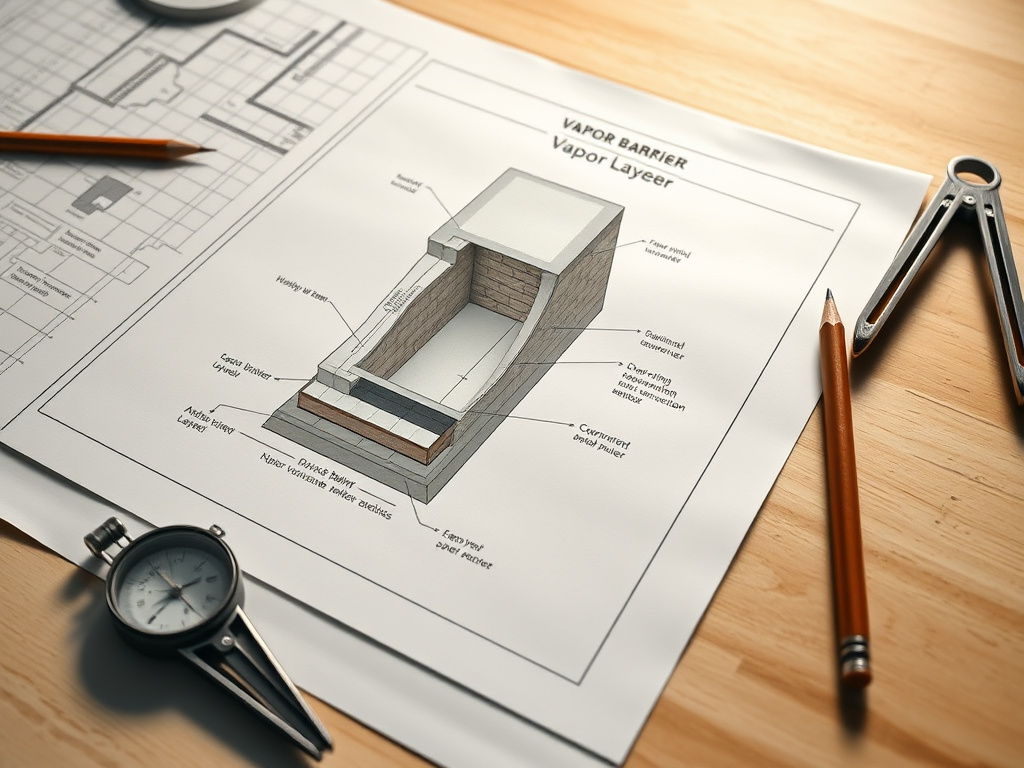
Building codes don't treat vapor control as a yes-or-no question. The IRC defines three classes based on permeance: Class I (0.1 perm or less — essentially vapor-impermeable), Class II (greater than 0.1 up to 1.0 perm), and Class III (greater than 1.0 up to 10 perm — a vapor retarder, but a relatively permeable one). Which class an assembly needs, and where it needs to sit within the wall or roof, depends on climate zone and the rest of the assembly's construction.
Spray foam's role in this framework depends heavily on foam type. High-density closed-cell SPF is dense enough that it commonly performs as a Class II vapor retarder in typical application thicknesses. Low-density open-cell foam is significantly more vapor-permeable and generally does not meet Class II on its own — which means an open-cell assembly in a climate zone that requires a lower-permeance retarder needs an additional vapor-control layer to comply.
- Class I: ≤0.1 perm — essentially vapor-impermeable
- Class II: 0.1–1.0 perm — where high-density closed-cell SPF commonly lands
- Class III: 1.0–10 perm — a retarder, but meaningfully more permeable
Cold Climate Zones: Controlling Inward Vapor Drive From the Interior
In colder climate zones (commonly Zones 5 through 8, and Marine 4 under the IRC), the dominant moisture-drive direction in winter is from the warm, humid interior toward the cold exterior. Code has historically required a Class I or II vapor retarder on the interior side of the assembly in these zones to prevent that moisture from diffusing into the wall cavity and condensing against a cold surface.
This is also where dew-point analysis matters most for SPF assemblies: if closed-cell foam is used as exterior continuous insulation or as part of a mixed assembly, the foam layer generally needs to be thick enough that its own interior-facing surface stays above the dew point — a foam layer that's too thin can still allow condensation to form on the inside face of the foam, inside the cavity, even though the foam itself cured correctly.
- Interior Class I/II retarder is the traditional cold-climate strategy
- Foam thickness must be sufficient to keep its interior face above dew point
- The 2021 IECC's push toward continuous exterior insulation in Zones 5-8 changes where that dew-point boundary sits
Hot-Humid Climate Zones: The Drive Direction Reverses
In hot-humid climate zones, moisture drive is often the opposite of the cold-climate case — humid exterior air driving inward toward air-conditioned interior space. An impermeable vapor retarder placed on the interior side of the wall in this climate can actually trap moisture that enters from outside, rather than controlling it, which is why prescriptive vapor-retarder requirements are relaxed or reversed in these zones rather than applying the cold-climate rule uniformly.
This is a common source of confusion on projects that move a standard cold-climate assembly detail into a hot-humid location without re-evaluating the vapor strategy — a detail that performed well in one climate zone can create a moisture problem in another.
Mixed and Marine Climates: Where Assumptions Break Down Most Often
Mixed-humid and marine climate zones see meaningful moisture drive in both directions across the year, which is exactly why these zones are where a generic, copy-pasted vapor-retarder detail is most likely to be wrong. A vapor-retarder strategy tuned only for winter (interior-side control) can trap summer inward moisture drive, and vice versa.
These are also the zones where a 'smart' or variable-permeance vapor retarder is most often discussed as an alternative to a fixed Class I or II layer — allowing the assembly to dry in whichever direction the seasonal moisture drive is actually going, rather than locking in a single-direction assumption.
Why This Needs Project-Specific Analysis, Not a Rule of Thumb
Climate zone, foam type, assembly orientation (wall vs. roof), interior humidity conditions (a pool house or a commercial kitchen behaves very differently than a typical home), and whether the assembly includes any additional vapor-permeable or impermeable layers all interact to determine the right strategy. Prescriptive code tables cover the common cases well; unusual assemblies, mixed insulation strategies, and buildings with atypical interior humidity loads are where a project-specific dew-point and vapor-permeability analysis earns its cost.
If you're specifying or reviewing an SPF assembly and the climate zone, foam type, or interior use doesn't match a standard prescriptive case cleanly, that's the signal to get an assembly-specific analysis rather than defaulting to a detail that worked on a different project.
Frequently asked questions
Commonly, at typical application thicknesses for high-density closed-cell foam — but the specific perm rating depends on the product and the actual installed thickness, so it's worth confirming against manufacturer-tested data for the specific assembly rather than assuming.
Yes, but it commonly needs a supplemental vapor-control layer on the interior side in colder zones, since open-cell foam alone typically doesn't meet the Class I/II retarder requirement those zones call for.
An impermeable layer placed on the interior side in a hot-humid climate can trap moisture driving in from the exterior, rather than controlling it — a common cause of hidden condensation problems when details are reused across climate zones without re-evaluation.
Have a project that needs an engineering opinion?
Tell us about the project and we'll scope a consultation.